
Japanese
国語 · kokugo
Read stories and explain ideas in Japanese.
Many subjects will feel familiar. The language, examples and books can show you another way to look at them.
国語 · kokugo
Read stories and explain ideas in Japanese.
算数・数学 · sansū / sūgaku
Use numbers, shapes and graphs to solve problems.
理科 · rika
Observe the world, ask questions and look for evidence.
社会 · shakai
Explore places, history and how people live together.
英語 · eigo
Learn another language, often with explanations in Japanese.
情報 · jōhō
Think about data, computers and information in daily life.
These are our own examples, not copied textbook pages. They show ways to start thinking about a subject.
Tree → woods → forest. Can you spot the shape for a tree inside the other characters?
木 means “tree”. The shape appears twice in 林 and three times in 森. Not every Japanese character works this way.
Four equal parts. Three are coloured. What fraction can you see?
Three quarters: 3/4. The parts must be equal. The same idea works with a cake, a strip of paper or a shape.
A seed grows into a plant. Look at the roots, stem and leaves. What changes each day?
Draw what you see on different days. Add dates. Compare the drawings before deciding what changed.
These examples come from the recorded 2026 school textbook catalogue. They are not a ranking, and one book is not used in every school.
| Subject | Original title | Textbook code | Publisher code and Japanese name |
|---|---|---|---|
| Mathematics | 中学数学3 | 数学|116-92 | 116|日文 |
| Science | 中学校 科学 1 | 理科|011-72 | 11|学図 |
| Japanese | 現代の国語 3 | 国語|015-92 | 15|三省堂 |
These books have Japanese explanations. A textbook code helps you identify a school textbook. It is different from the ISBN used for many general books.
The recorded catalogue was checked on 26 August 2026. We have not checked current stock. Learn how to identify and get a school textbook.
The national curriculum gives broad standards. Textbook authorisation and a school’s choice of book are separate.
Read MEXT’s explanation of the curriculum standards.
You can also compare six extra study books. These are general books, not the school textbooks above.
A picture or a film title can make you curious about a language. Start with something you recognise. Then look at the Japanese words.
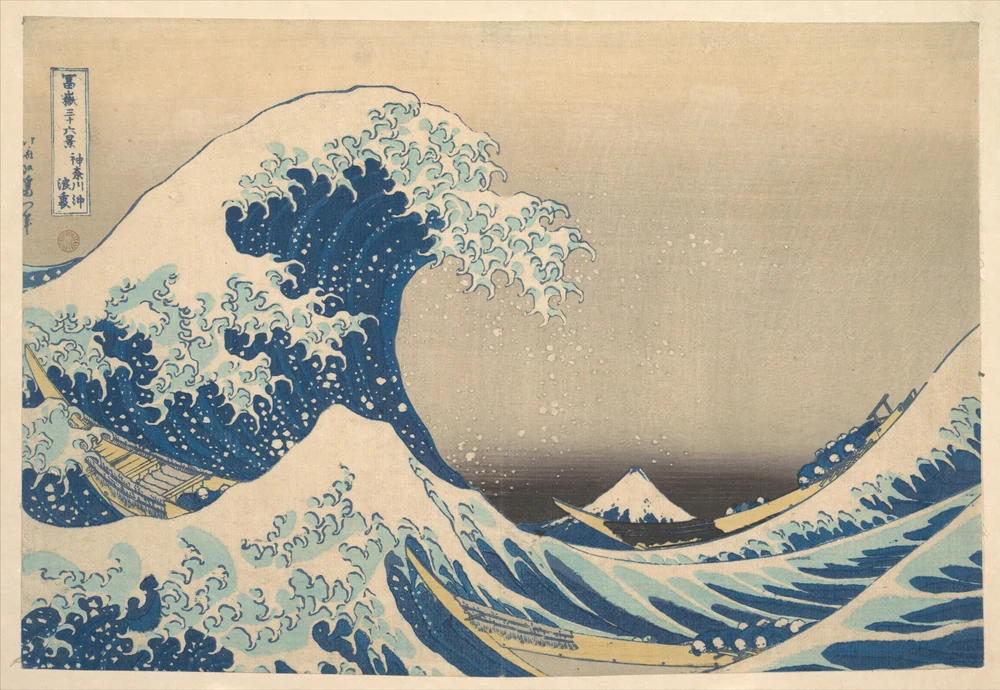
やま → 山 → mountain
Can you find Mount Fuji behind the waves? 山 (yama) means “mountain”. This is a word for something in the picture, not a reading of its printed title.
東京物語
Tokyo Story, directed by Yasujirō Ozu, was released in 1953. Its Japanese title is 東京物語 (Tōkyō monogatari).
東京 is Tokyo. 物語 (monogatari) means “story”. A film title can be a reason to start noticing Japanese words.
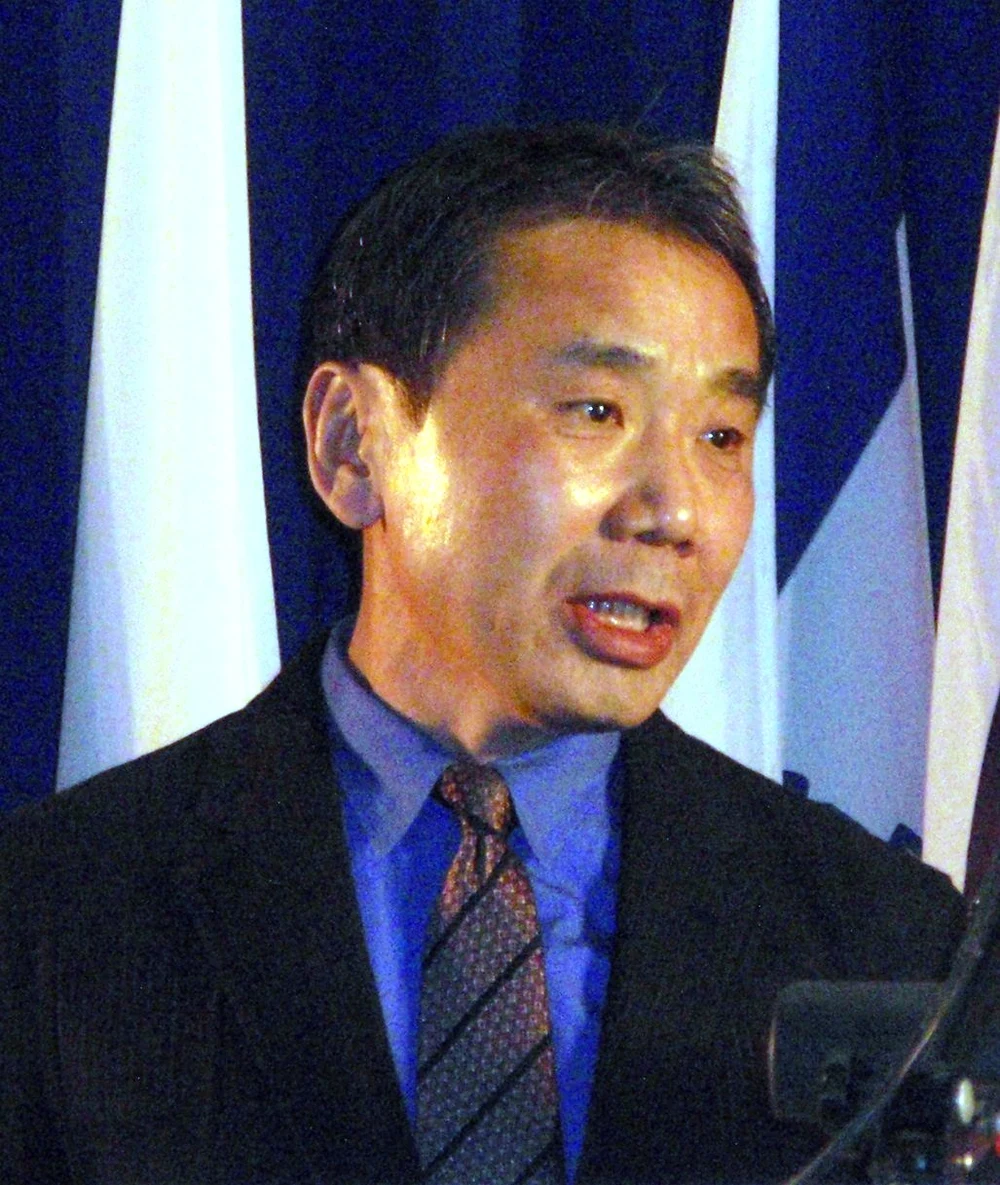
村上春樹 · Haruki Murakami
You may have met his stories in translation. Norwegian Wood is ノルウェイの森 in Japanese. Can you see the character 森 from the tree example above?
These novels are literature, not beginner language lessons. To begin reading Japanese, start with short texts and a first-year Japanese schoolbook.
Explore the author’s books in English · Check the Japanese title with its publisher.
Blade Runner can be another starting point for noticing Japanese in film. The BFI describes Japanese as one of the languages used in the film’s “cityspeak”. Its imagined city is not a documentary picture of Japan.
Read the BFI’s film background.
Seven Samurai, directed by Akira Kurosawa, is a Japanese film from 1954. Explore the film on Criterion’s official page.
Return to Japanese as a school subject. A first-year schoolbook offers a more guided way to begin reading.